





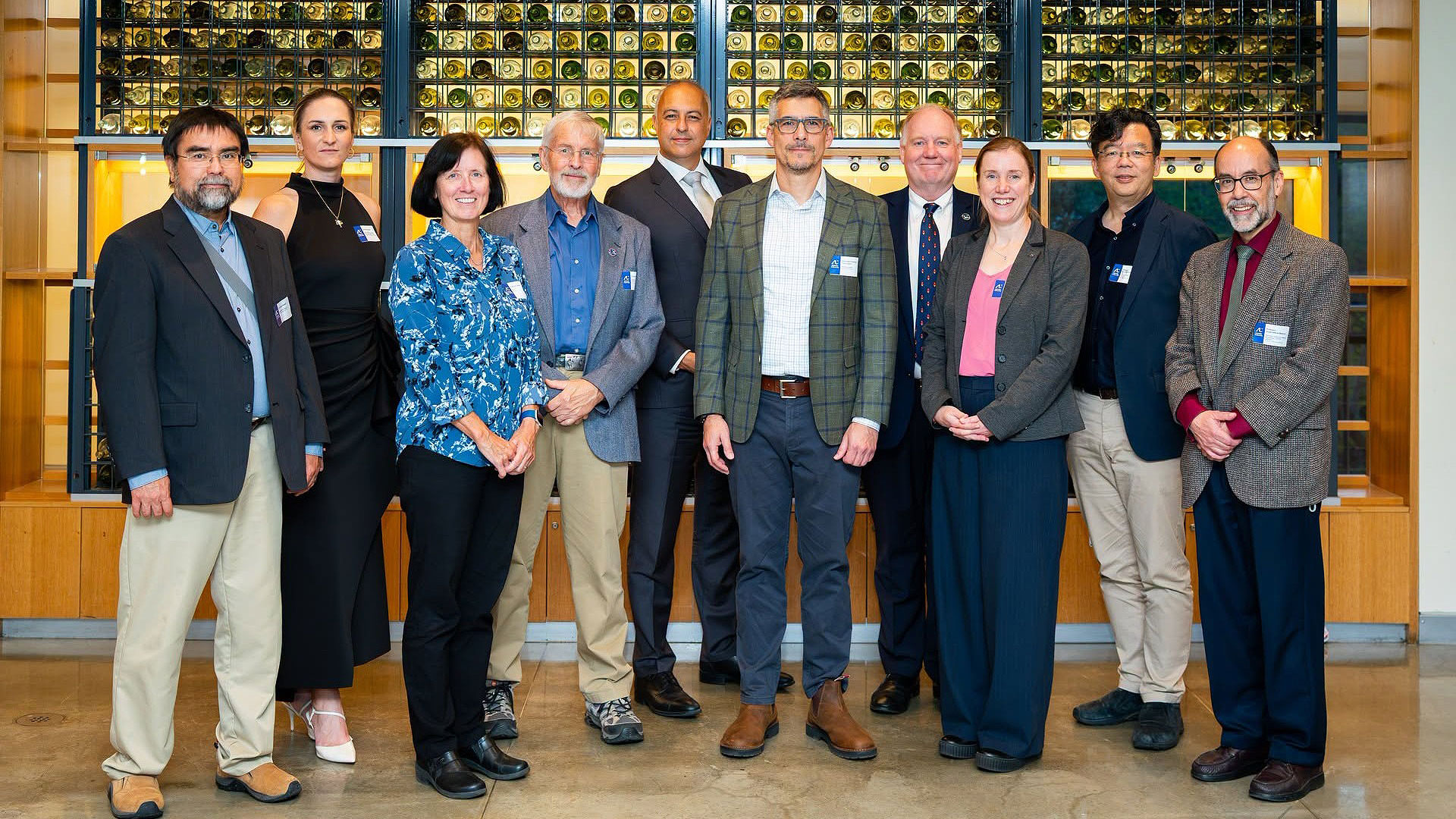
Enabling humans to live in space has taken one small step forward with Adelaide University launching the Andy Thomas Institute for Space Resources (ATISR).
Formerly known as the Andy Thomas Centre for Space Resources, its evolution into an institute will create a stronger platform for future research, partnerships and opportunities for researchers and students, with the focus still on enabling human settlement of deep space and lunar exploration.
Building on seven years of nationally and internationally recognised research, the ATISR will be able to draw on expertise from diverse fields. It also has affiliated experts across 16 Adelaide University schools, including science, engineering, law, psychology, architecture and health.
Adelaide University Vice-Chancellor and President Professor Nicola Phillips said the idea of humans living in space is a dream shared by many people all over the world.
“It’s so exciting to see talented, innovative researchers, right here in South Australia, collaborating to make that a reality,” Professor Phillips said.
“Adelaide University is thrilled to support such fantastic work, and so proud to launch our first new institute, the Andy Thomas Institute for Space Resources.”
The ATISR remains a central member of the Australian Space Agency’s Roo-Ver Consortium, with researchers helping to test Australia’s first Moon rover, which will journey to the lunar south pole in 2030.
ATISR is the operator of the first lunar and Martian surface science labs in the southern hemisphere and the first in the world to develop its own low-density lunar regolith simulant.
The institute’s research and technical teams are currently evaluating rover mobility and vision systems in a simulated lunar environment.
“This work has led to some major breakthroughs in low-gravity simulation and modelling techniques, showcasing the Centre’s research and technical expertise, and Adelaide University’s space research facilities,” ATISR Director Associate Professor John Culton said.
The institute’s work further strengthens South Australia’s position as a nationally significant centre for space research and innovation.
The Centre, and now the Institute, is named in honour of Dr Andy Thomas AO – University of Adelaide alumnus, and Australia’s NASA astronaut who flew four shuttle missions and spent a total of 177 days in space.
—
Photo courtesy of Adelaide University: Members of the new Andy Thomas Institute for Space Resources at Adelaide University, including NASA astronaut and wife of Dr Andy Thomas AO, Dr Shannon Walker (third from left).
