





South Australia is pushing the boundaries of medical innovation, investing in home‑grown space projects that aim to accelerate breakthroughs in cancer treatment and pharmaceutical development by harnessing the power of microgravity.
The two projects – led by local companies Cambrian Defence and Space and ResearchSat – have each secured $150,000 through Round 3 of the South Australian Space Collaboration and Innovation Fund, which supports the rapid transition of space technologies into real‑world applications.
Microgravity to advance cancer research
Cambrian Defence and Space, working with the Centre for Cancer Biology and Blue Dwarf Space, is developing an end‑to‑end service that will give Australian scientists affordable, sovereign access to microgravity environments.
The project will enable scientists to study cancer cells in space – where the absence of gravity allows biological processes to behave differently – opening the door to insights that cannot be achieved on Earth.
By developing an end-to-end service that provides affordable, reliable access to microgravity, Cambrian and its partners aim to remove long-standing barriers to space-based oncology research.
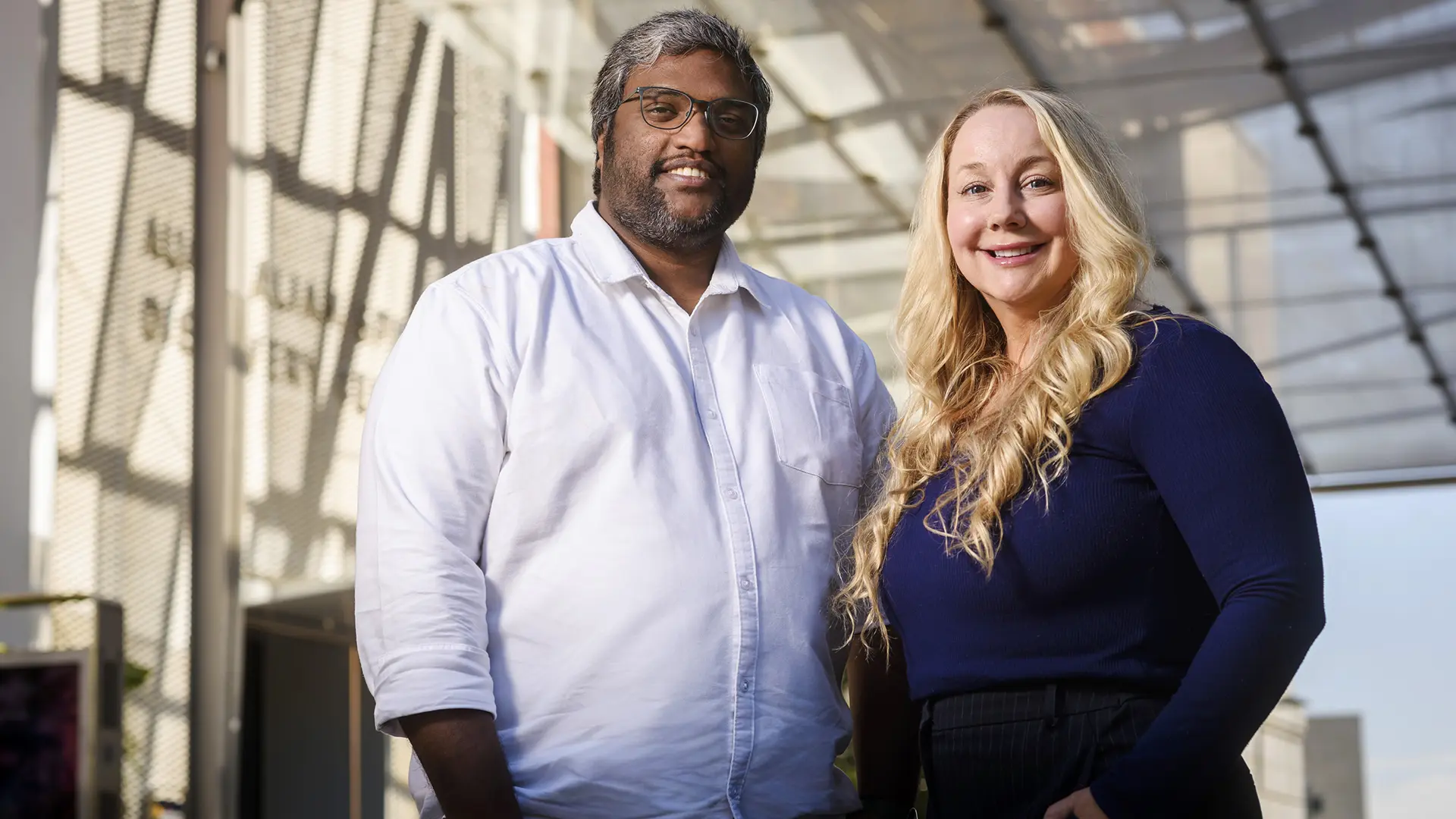
Cambrian CEO and Director of Space Tiffany Sharp said the funding would help unlock discoveries that have previously been out of reach.
“With this funding, we can provide Australian researchers with practical access to microgravity, enabling new insights into cancer behaviour, whilst helping accelerate the pathway from research to early detection and treatment,” Sharp said.
AI‑driven digital twins for drug development
The other project, led by South Australian space‑biotech company ResearchSat in partnership with AltData and AICRAFT, will combine real microgravity experiments with advanced AI to create highly accurate digital twins of biological systems.
These models will give researchers faster, more affordable access to microgravity‑derived biological insights, a capability that has traditionally been limited to major global pharmaceutical companies.
With the pharmaceutical industry investing around $280 billion annually in R&D, and $3-5 billion expected to flow into microgravity research, the project positions South Australia to tap into a rapidly expanding global market.
ResearchSat Founder and CEO, Raviteja Duggineni, said the support would accelerate the company’s pioneering space bioinformatics platform through a proof-of-concept mission to the International Space Station (ISS).
“By combining real, space-flown biological data with edge computing from AICRAFT and ALTDATA’s hybrid AI models, we are developing physically validated microgravity digital twins that generate scalable, high-fidelity biological insights,” Duggineni said.
“This capability democratises access to space-enabled drug discovery, unlocking faster, more affordable R&D for South Australian biotech leaders such as Carina Biotech and Telix Pharmaceuticals, while creating high-value jobs and export opportunities for the state.”
The South Australian Space Collaboration and Innovation Fund, facilitated by the South Australian Space Industry Centre and the Defence Innovation Partnership, aims to strengthen the state’s space ecosystem while accelerating commercialisation opportunities and opening new economic pathways for the state.
