





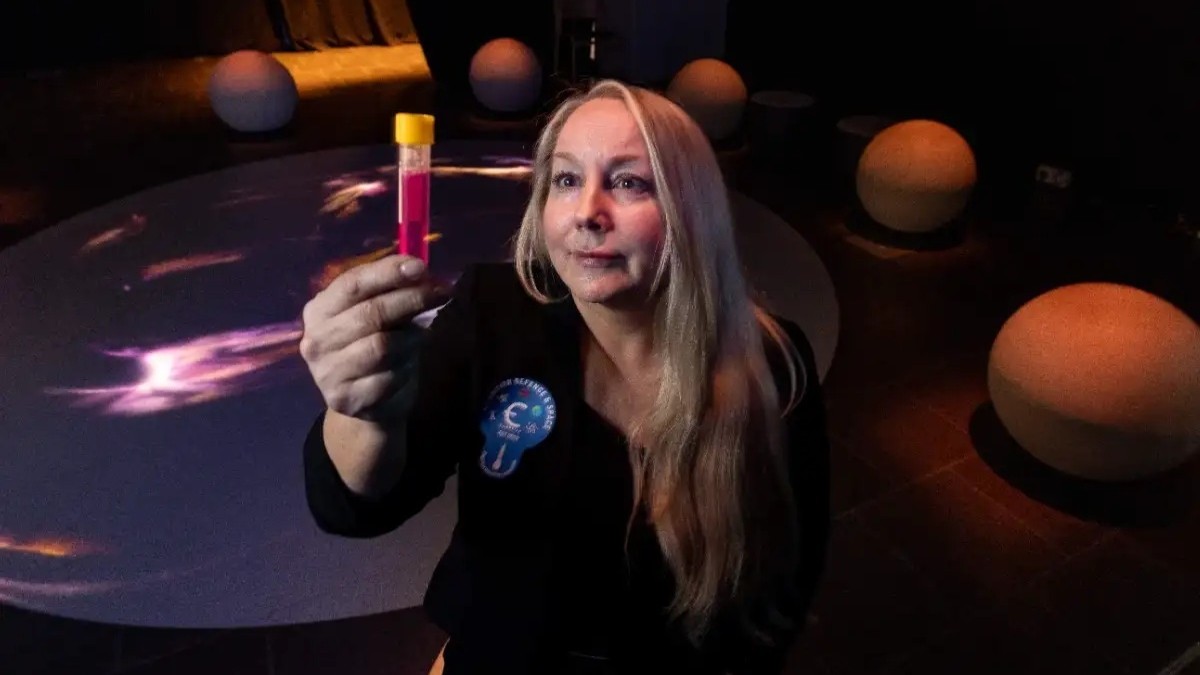
A South Australian company will send living human cells into space next month as part of a groundbreaking cancer research mission.
Backed by a $150,000 Space Collaboration and Innovation Fund grant from the South Australian Government, the mission brings together South Australian researchers, industry and international partners to investigate how human cells respond to microgravity and whether those changes could reveal new insights into cancer progression and earlier detection.
Cambrian Defence & Space, a veteran-owned company founded in Adelaide, is leading the mission, alongside grant partner Blue Dwarf Space and researchers from the Robinson Laboratory at the University of Adelaide’s Centre for Cancer Biology, who prepared the living cells.
The cells will be flown in a specialised Australian-owned, Swedish-developed reusable payload, engineered to maintain the experiment at approximately 37°C throughout the mission.
After returning to Earth, the cells will be recovered and analysed to determine how they responded to microgravity, which acts as a biological stressor.
Microgravity has the potential to expose cellular responses and vulnerabilities that are difficult to observe in humans and animals under normal Earth conditions.
Researchers will investigate whether these changes could reveal new insights into cancer progression and earlier detection.
Cambrian Defence & Space CEO Tiffany Sharp said the upcoming mission is not just about sending cancer cells to space.
“It is about creating repeatable access to microgravity for Australasian research and giving our scientists access to an extraordinary environment in which to accelerate discovery,” Ms Sharp said.
“Cambrian’s experience across multiple microgravity R&D missions provides the capability to make that pathway to space practical, affordable and repeatable.”
The upcoming mission builds on Cambrian Defence & Space’s previous biological microgravity R&D experience and its international partnership with SSC Space Sweden, for which Cambrian is the primary representative for microgravity services in Australasia.
The reusable payload can be adapted for future medical, pharmaceutical, botanical, agricultural and materials research, extending the capability well beyond this cancer mission.
South Australian Space Industry Centre Director of Space Campbell Pegg said the Space Collaboration and Innovation Fund supports partnerships that transform cutting-edge research into real-world outcomes while growing South Australia’s space sector.
“This mission demonstrates how space-enabled technology development can solve challenges on Earth, bringing together South Australian researchers, industry and international partners to advance cancer research with the potential to improve health outcomes worldwide,” he said.
The mission is expected to take place in October from Esrange Space Center in Kiruna, Sweden.
The mission will last about 10-12 minutes, including 5-10 minutes of microgravity before the cells are returned to Earth.
–
Image credit: Cambrian Defence & Space CEO Tiffany Sharp, courtesy The Advertiser
