





The ARC Centre of Excellence in Plants for Space and Adelaide University have been announced as the first Australian organisations to join a global space research initiative led by Axiom Space.
The Axiom Space University Alliance is quickly becoming a leading international network dedicated to advancing microgravity, technology and commercial innovations in low-Earth orbit (LEO). The University Alliance is focused on supporting and advancing space science during the transition from government-led to commercially-owned and operated space stations.
Director of Plants for Space Professor Matthew Gilliham explained alliances such as this are vital for the space community.
“Collaboration is critical to ensuring humanity’s next steps in space are taken the right way,” said Professor Gilliham.
“Networks like the Axiom Space Alliance are essential for driving innovations needed for humans to thrive in space, while creating pathways for serious benefits back on Earth.”
P4S and Adelaide University was among welcomed 26 institutions from across the globe that were welcomed to the Alliance in May. As part of the Alliance institutions contribute to identifying future research priorities, participating in international collaborative scientific initiatives, and strengthening national strategic positioning in emerging commercial orbital research activities.
Axiom Space’s Chief Science Officer Dr Lucie Low explained that the Alliance’s goal is to unite the international research community to enable human progress.
“Together, Alliance members are taking the initiative to ensure microgravity research benefits everyone on Earth and our shared goals fulfill a scientific purpose to advance civilisation,” said Dr Low.
The announcement follows the success of several projects for P4S with Axiom Space, including a current collaboration focusing on pharmaceutical production in space and low resource environments on Earth.
This project is scheduled for demonstration on the International Space Station in 2027.
—
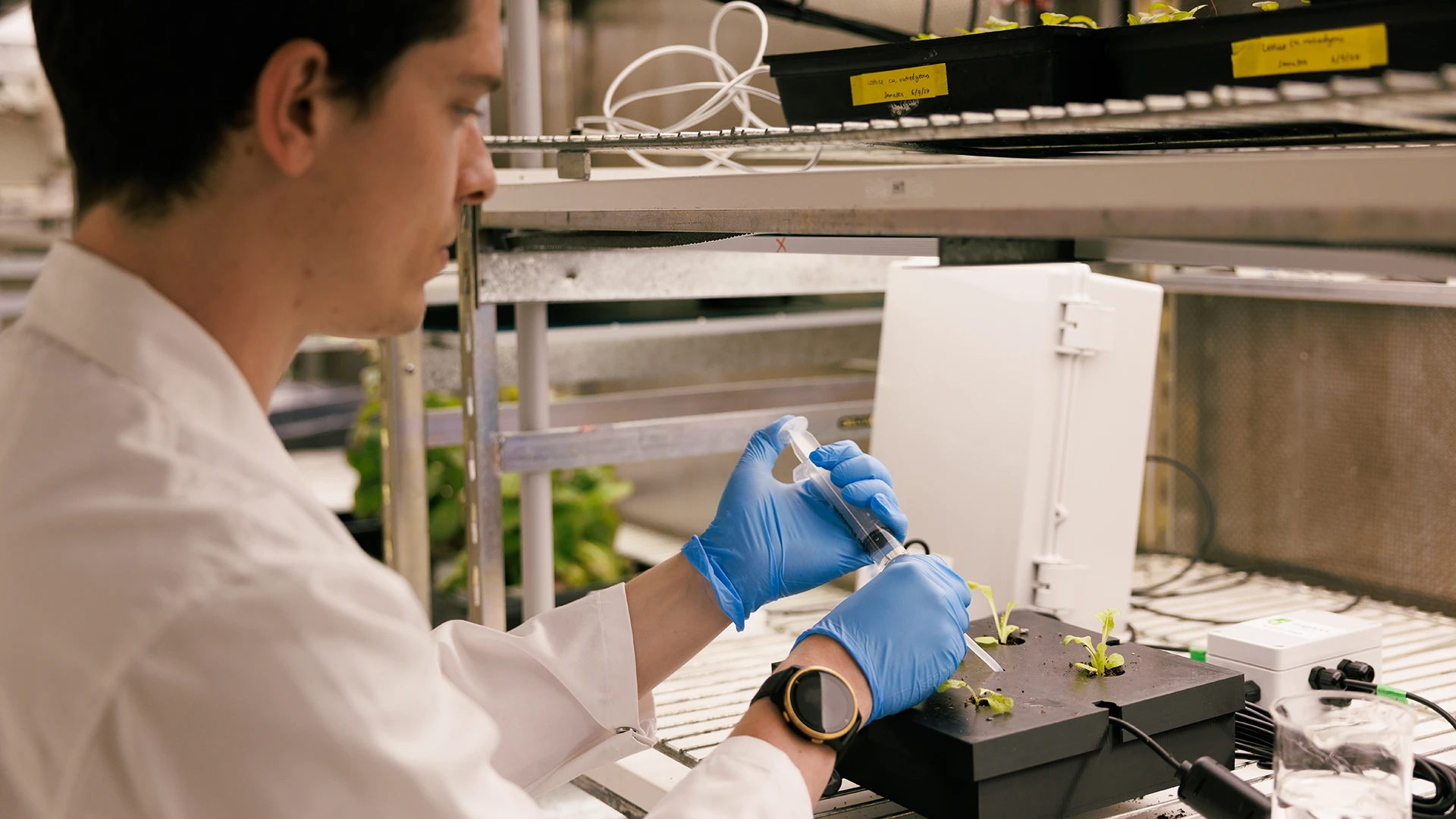
Image: P4S Researchers such as Dr Troy Miller (UWA) are exploring how microgravity conditions influence plant growth. Their findings will guide the development of new agricultural systems, optimised for watering in the absence of gravity, and give rise to more nutrient-dense crops for astronauts to eat. Credit: ARC Centre of Excellence in Plants for Space / Daylight Breaks
