





Michael Brown MP
Assistant Minister for Artificial Intelligence (AI), Digital Economy, Defence and Space Industries
A South Australian-led space project is taking cancer research beyond Earth, harnessing microgravity to accelerate the development of life-saving therapies with backing from the South Australian Government.
The project, being led by local company Cambrian Defence and Space in collaboration with Adelaide University’s Centre for Cancer Biology and Blue Dwarf Space, was recently awarded $150,000 through Round 3 of the South Australian Space Collaboration and Innovation Fund.
The project aims to unlock affordable access to microgravity environments, enabling Australian scientists to conduct advanced biomedical research in space and accelerate the development of cancer therapies and treatments.
Microgravity provides a unique, gravity-free environment for scientists to observe and manipulate cancer cells in ways not possible on Earth.
By developing an end-to-end service that provides sovereign access to microgravity environments, Cambrian and its partners are removing the barriers that have traditionally prevented cutting-edge oncology research in space, leading to potential breakthroughs in medical science.
The other health-related project awarded $150,000 through this latest round of the Fund, promises to deliver transformative benefits to the pharmaceutical industry.
Led by South Australian space-biotech company ResearchSat, in partnership with AltData and AICRAFT, the initiative will develop advanced software that combines real microgravity experiments with AI data to create highly accurate digital models, providing new biological insights for pharmaceutical research.
This innovation will give researchers faster, more affordable access to a microgravity environment that has been previously limited to major pharmaceutical companies.
By democratising space-based research, the project opens the door to breakthroughs in drug development and positions local space companies to tap into one of the world’s largest pools of annual research and development investment, driven by the pharmaceutical industry.
The pharmaceutical industry invests around $280 billion annually in R&D, with $3-5 billion projected for microgravity research. These projects enable South Australia to access high-value global markets, grow the state’s economy and increase economic complexity.
The Fund, supported by the South Australian Space Industry Centre and the Defence Innovation Partnership, aims to fast-track the transition of space technology into operational use while growing South Australia’s space ecosystem.
Quotes attributable to Michael Brown
South Australia is at the forefront of our nation’s space industry, recognised globally as a forward-thinking leader with a robust ecosystem developing cutting-edge space capability.
Through the South Australian Space Collaboration and Innovation Fund, we are continuing to push the boundaries of space innovation and deliver solutions that benefit critical industries, such as health.
These two pioneering projects have the potential to transform health and medical research through space innovation. By enabling our scientists to conduct advanced research in microgravity, we are paving the way for the development of new drugs and more effective treatments for devastating diseases like cancer.
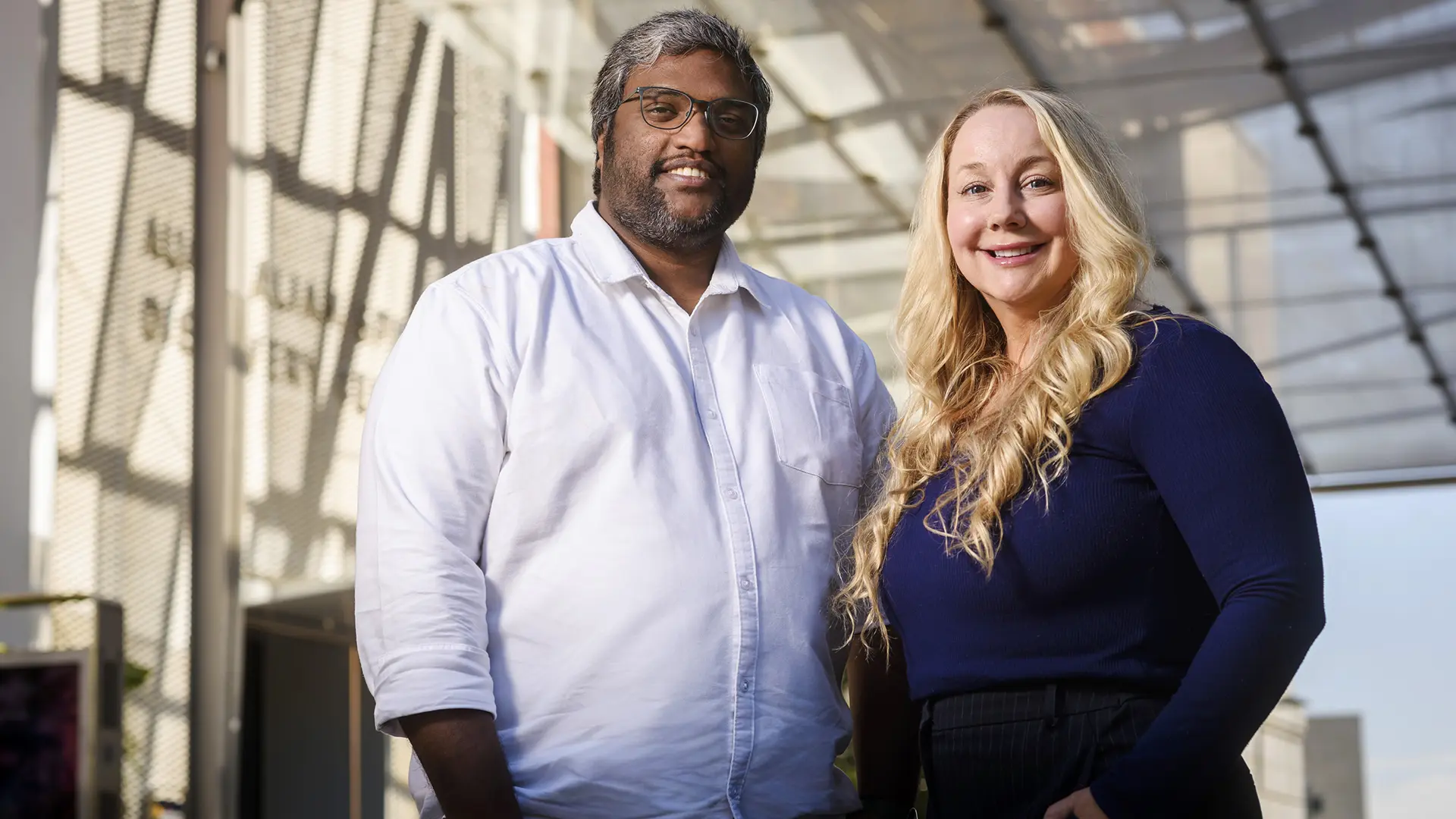
Quotes attributed to Tiffany Sharp, CEO and Director of Space, Cambrian Defence and Space
With this funding, we can provide Australian researchers with practical access to microgravity, enabling new insights into cancer behaviour, whilst helping accelerate the pathway from research to early detection and treatment.
Quotes attributed to Raviteja Duggineni, Founder & CEO, ResearchSat Pty Ltd
This support from the South Australian Government is deeply meaningful for our team and our partners, which accelerates our pioneering space bioinformatics platform through a proof-of-concept mission to the International Space Station (ISS).
By combining real, space-flown biological data with edge computing from AICRAFT and ALTDATA’s hybrid AI models, we are developing physically validated microgravity digital twins that generate scalable, high-fidelity biological insights.
This capability democratises access to space-enabled drug discovery—unlocking faster, more affordable R&D for South Australian biotech leaders such as Carina Biotech and Telix Pharmaceuticals, while creating high-value jobs and export opportunities for the state.
