





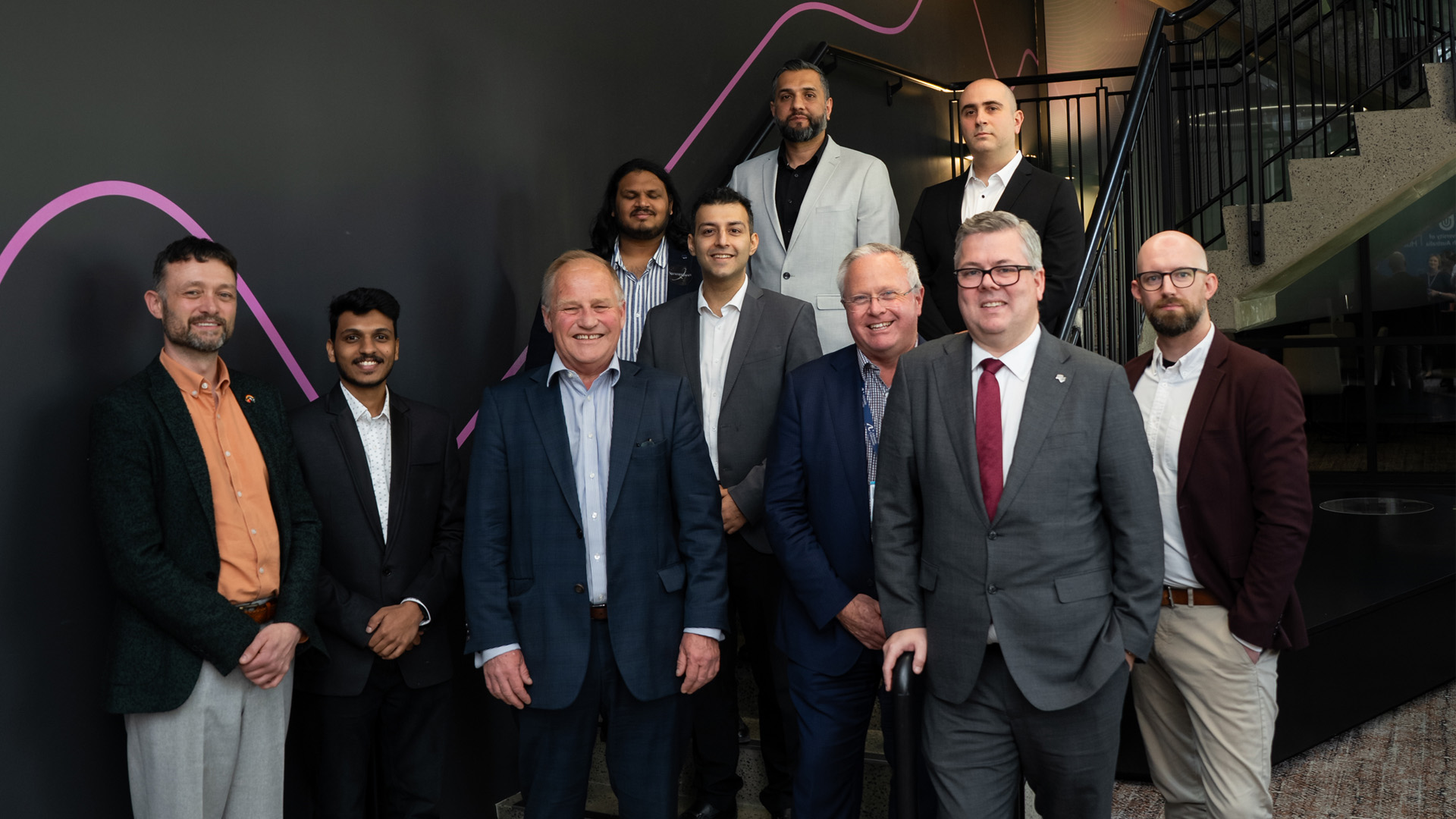
South Australia’s space sector continues to soar, with six pioneering start-ups graduating from UniSA’s 2025 Venture Catalyst Space accelerator program – each tackling critical challenges in satellite communications, in-orbit services and space data analytics.
Run by the Innovation & Collaboration Centre (ICC) at the University of South Australia and supported by the South Australian Space Industry Centre, the program aims to drive innovation, capability and commercial growth in the state’s rapidly evolving space industry.
This year’s graduates are developing cutting-edge space capabilities across satellite communications, launch systems, data management and propulsion. Representing both local and international innovation, the cohort includes:
- AFTdynamics (Adelaide, Australia) – developing advanced propulsion and flight systems to enhance satellite manoeuvrability and reduce the cost of access to space
- Altair Orbital (Adelaide, Australia) – building agile and mobile space launch vehicles to enable regular and affordable deployment of satellites into space
- Zyntax AI (Adelaide, Australia) – harnessing artificial intelligence to enable autonomous decision-making and optimise mission efficiency in space operations
- GroundZero Space (Victoria, Australia) – advancing space traffic management and situational awareness through real-time orbital tracking and analytics
- BioSky Space Innovations (New Delhi, India) – combining satellite data and AI to deliver smart insights for industry, aiming to become the Global South’s leading space intelligence company
- TrizLabz (Kerala, India) – designing next generation materials and manufacturing solutions to improve the performance and resilience of space hardware
For AFTdynamics founder Dr Alexander Wright, the program provided the support and mentorship that enabled him to transform his ideas into a viable company now raising investment to build rocket propulsion systems in South Australia.
“The ICC hasn’t just shaped my path; it’s completely created it. AFTdynamics wouldn’t exist without the Venture Catalyst Space program,” Dr Wright said.
“As a solo founder, it can be isolating, but the Venture Catalyst Space program gave me a community, structure, and business know-how I wouldn’t have had otherwise.
“It kept me on track and stopped me from building something no one wanted.”
Since its inception, Venture Catalyst Space has supported 46 startups and 90 founders, with more than 90 per cent still operating. Its economic impact on South Australia is estimated at nearly $36 million.
UniSA’s Deputy Director of Business Incubation Craig Jones said the program plays an important role in supporting the state’s growing space ecosystem and helping founders turn bold ideas into commercial outcomes.
“Each of these startups is tackling a critical challenge for the future of space,” he said
“The 2025 cohort reflects that evolution: founders who aren’t just building clever technology, but building capability, jobs, and international partnerships that strengthen the entire industry.”
More information about the 2026 program will be released soon via the ICC website.
—
Photo: 2025 Venture Catalyst Space cohort with Craig Jones (Deputy Director: Business Incubation, UniSA), Peter Stevens (Executive Director, Industry and Government, UniSA), Professor Peter Murphy (Deputy Vice Chancellor: Research and Enterprise, UniSA) and the Hon Michael Brown MP.
